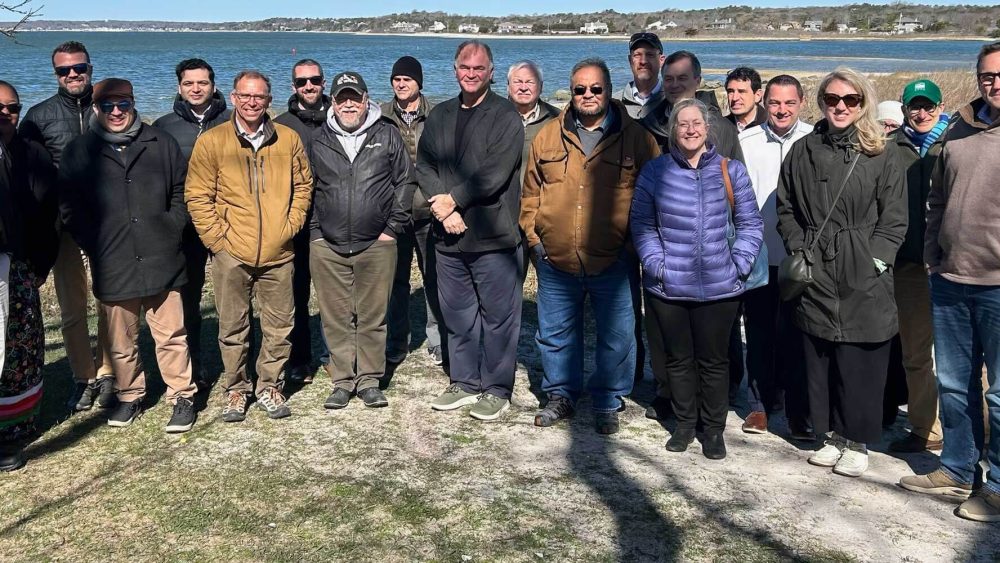

In September, members of the E-Enterprise for the Environment Leadership Council (EELC) gathered in Washington, DC for their Fall Meeting on key matters including data centers and their growing impact on environmental protection, permit modernization, and artificial intelligence (AI). EELC Co-Chairs Travis Voyles of EPA, Rob Singletary of Oklahoma, and Jerry Cain of the Mississippi Band of Choctaw Indians underscored the importance of their cooperative federalism responsibilities in addressing these issues.
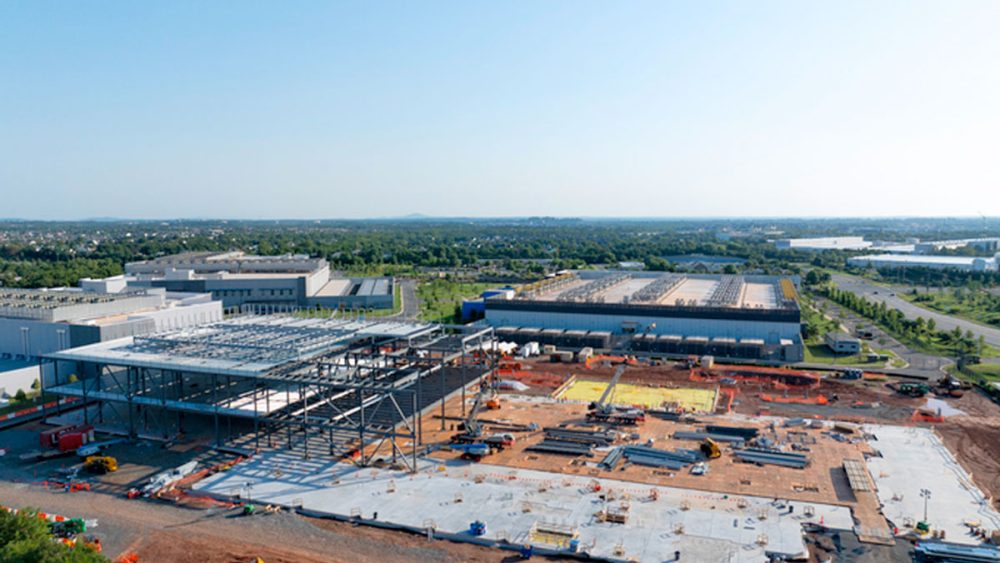
A guided tour of the QTS data center in Ashburn, Virginia, helped set the stage for these discussions. Participants learned firsthand about data center operations, environmental performance, and future industry trends.
After the tour, the EELC regrouped at EPA Headquarters to discuss how data center growth is affecting water, air, permitting, land use, and technology needs, and to identify opportunities for collaboration. Members heard from Loudoun Water – the public water utility serving data center hub Loudoun County – about its industrial water reuse program and data center impacts on water supply. Mike Rolband of Virginia presented his agency’s project to measure and publish the impact of data center turbines and backup generators on levels of carbon monoxide, nitrogen dioxide, and fine particulate matter.
The U.S. Department of Energy’s Office of Indian Policy featured its programs to provide legal assistance and information to help tribal governments evaluate opportunities for data center land leases, power purchase agreements, and job creation. The EELC capped off its data center discussions with guest speaker Professor Suhail Tayeb of New York University, who guided members through an exercise to identify key gaps in evaluating proposed data center projects. EELC members emphasized a need for more information and comprehensive coordination strategies.
To support ongoing consideration of data centers, members reviewed several relevant resources, including an EPA guide on Reuse Considerations for Data Centers on Brownfield Sites and an Executive Order from Wyoming’s Governor on Data Centers the Wyoming Way. Shortly after the meeting, Virginia’s Governor released an Executive Order on a data center accountability framework, and Maryland’s Governor signed an Executive Order codifying strict guardrails for “transparent and accountable” data center development.
The EELC also heard updates on new technological tools and agency initiatives. Rolband shared Virginia’s work to boost field efficiency with a mobile stormwater inspection tool developed in-house using the agency’s existing ArcGIS Survey 123 license. EPA’s Office of Air & Radiation relayed progress on its AirHub project. Formerly known as the Unified Platform, AirHub is a multi-year effort to modernize how clean air data is collected, managed, and shared among regulatory partners. EPA plans to release an updated interface for State Implementation Plan submissions in May 2027.
The discussions touched on broader technology innovations as well, with the White House Council on Environmental Quality (CEQ) sharing takeaways from its July 31 Permitting Innovators Expo that spotlighted business process modernization, workflow automation, digital-first documents, and tools to improve timeline predictability. CEQ plans to release a catalogue of permitting technology providers this fall.
The Fall Meeting also continued the EELC’s long-running focus on AI. EPA presented its AI governance framework and noted its inventory of AI use cases.
For more information on the meeting, contact Jessica Snyder of EPA or Beth Graves of ECOS.